Our first stop in the Mediterranean was Ashdod, Israel on Tuesday, April 22nd, two days after celebrating Easter aboard ship. The population of Israel is 8,000,000 people of which 75% are Jewish and the remainder are Muslims and Christians. There are immigrants from all over the world that have settled here, many of whom came here to escape religious persecution in their home countries. It is a beautiful, but complicated country with an interesting human mosaic of religions and cultures. To complicate the situation, Israel shares borders with Jordan, Syria and Lebanon which all have their own self interests and internal problems. Also, Israel has its issues with the troubled Palestinian areas of the West Bank and Gaza Strip. In spite of all these issues, tourists pour into this country to visit the Holy Land and the Israelis welcome them with open arms.
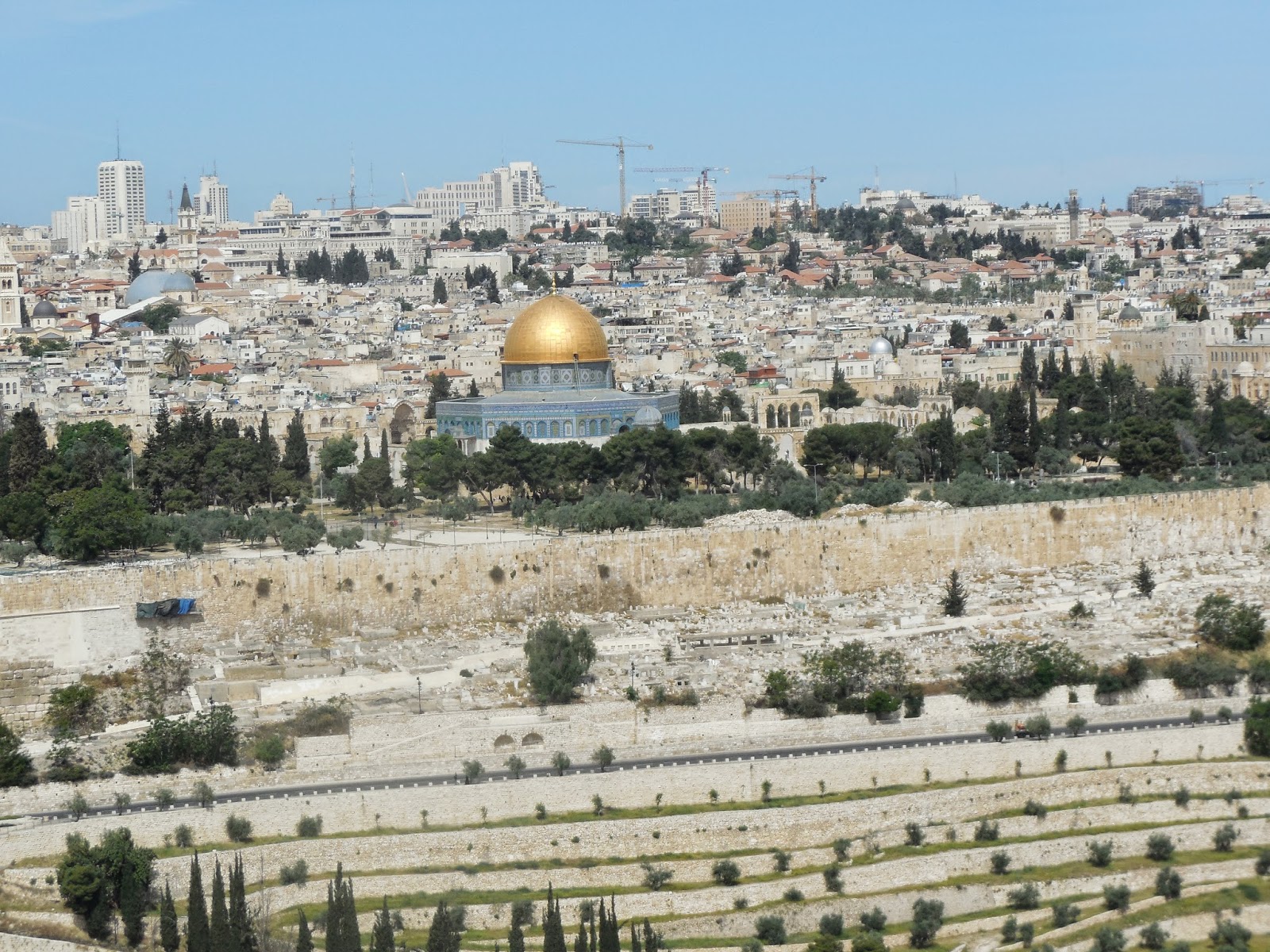
Early in the morning we boarded a tour bus for an all day tour of Jerusalem and Bethlehem. We drove outside of Ashdod for about an hour to Jerusalem. First, we stopped for a panoramic view of Jerusalem from the Mount of Olives. What an incredible site to behold as you look over to the old walled "Golden City" of Jerusalem and over to Mount Zion! From this point we could see into the old city of Jerusalem and saw where Jesus was crucified. We then toured around Jerusalem for a closer look. Next, we visited the Garden of Gethsemane and the Church of All Nations. Inside the Church we saw the rock where Jesus prayed the night before his arrest.
After enjoying a buffet lunch at a luxury hotel, we re-boarded the bus to drive to Bethlehem to visit the Church of the Nativity that is located at the birthplace of Jesus. An interesting thing happened at this point. Our tour guide who is Israeli is not permitted to guide tours in Bethlehem. Bethlehem is located in the Palestinian West Bank area of Israel. A Palestinian guide must be used. There is a dividing wall and checkpoint at which we changed guides. It was very much a border crossing and a change in culture. A Palestinian Christian guide took over the tour and led us around Bethlehem. It was an amazing experience to see the birthplace of Jesus which is marked by a monument inside a small crypt in the cave where he was born. The Church sits atop the birthplace monument and visitors walk down 14 steps into the grotto to the site. Also, within the cave area is the site where the manger was located within a few feet of the birth monument. After our visit, the Palestinian guide led us back to the wall where we passed through the checkpoint to pick up our Israeli guide to finish our long day of touring.


 On our second day in Israel, we sailed into the port city of Haifa where we took another long tour (10 hours). Our first stop was at Zippori Archaeological Park where we visited ancient ruins from Roman and ancient eras, including a 4,500 seat Roman theater which has been partially restored. This beautiful park on a sunny, clear day gave us a spectacular overlook of the Jordan River Valley and the Galilee mountains. We were both pleased to learn that Israel has so much natural beauty in addition to its rich history and cultures. From the park, we drove to an overlook of the Sea of Galilee. Although we were up on a high bluff, we were standing at sea level looking down at the Sea. . Beyond the Sea were the Golan Heights mountain ranges which we would visit later in the day. We drove by a "kibbutz" which was one of the original kibbutzes in Israel as our guide explained the socialist concept and lifestyle to us. There are many kibbutzes still in existence in Israel today. Next, we drove down to the Jordan River to the Yardenit, the site where Jesus was baptized by John The Baptist. There were busloads of tourists from all over the world visiting this historic site. Many people donned robes and went into the Jordan River for ceremonial baptisms. Afterwards, we ate lunch at a beautiful restaurant on the shore of the Sea of Galilee where we enjoyed a Mediterranean lunch and local beer as we sat overlooking the Sea. After lunch we drove up along a winding road into the Golan Heights for a view of the mountain ranges. Standing up on the top we looked out at Israel's borders with Jordan and Syria as our informative (and somewhat opinionated) tour guide explained some of the challenges and potential threats with Israel's volatile neighbors. Later in the day we also saw the border with Lebanon. Next, we visited Capernaum, the home of the disciple Peter on the shores of the Sea of Galilee. This was another interesting archaeological site. We also visited the areas where Jesus fed the 5,000 and spent much of his life before his pilgrimage to Jerusalem. At the end of the tour we drove back into Haifa and drove up to the top of Mt. Carmel for a scenic overlook of the port city. At the top of the mountain, we stopped at the edge of the Baha'i hanging gardens, a UNESCO World Heritage site which is the largest hanging gardens in the world. These gardens are a holy place for the followers of the Baha'i religion. Looking down over the gardens out towards the seaport, we enjoyed a jaw-dropping view of this beautiful city. It was a perfect end to this unforgettable day.




We enjoyed our two busy stops in Israel and hope we can visit again some day. Next stop, Rhodes, Greece.
Early in the morning we boarded a tour bus for an all day tour of Jerusalem and Bethlehem. We drove outside of Ashdod for about an hour to Jerusalem. First, we stopped for a panoramic view of Jerusalem from the Mount of Olives. What an incredible site to behold as you look over to the old walled "Golden City" of Jerusalem and over to Mount Zion! From this point we could see into the old city of Jerusalem and saw where Jesus was crucified. We then toured around Jerusalem for a closer look. Next, we visited the Garden of Gethsemane and the Church of All Nations. Inside the Church we saw the rock where Jesus prayed the night before his arrest.
After enjoying a buffet lunch at a luxury hotel, we re-boarded the bus to drive to Bethlehem to visit the Church of the Nativity that is located at the birthplace of Jesus. An interesting thing happened at this point. Our tour guide who is Israeli is not permitted to guide tours in Bethlehem. Bethlehem is located in the Palestinian West Bank area of Israel. A Palestinian guide must be used. There is a dividing wall and checkpoint at which we changed guides. It was very much a border crossing and a change in culture. A Palestinian Christian guide took over the tour and led us around Bethlehem. It was an amazing experience to see the birthplace of Jesus which is marked by a monument inside a small crypt in the cave where he was born. The Church sits atop the birthplace monument and visitors walk down 14 steps into the grotto to the site. Also, within the cave area is the site where the manger was located within a few feet of the birth monument. After our visit, the Palestinian guide led us back to the wall where we passed through the checkpoint to pick up our Israeli guide to finish our long day of touring.
Jerusalem
Domes where Jesus was crucified
and where he is buried
Lion's Gate
Church of All Nations
The Rock where Jesus prayed
the night before his arrest
Garden of Gethsemane
Mount of Olives
Wall separating the Palestinian West Bank
Entering the grotto marking the birthplace of Jesus
The monument of Jesus' birthplace
Monument marking the Manger site
Arriving into Haifa
Jordan Valley & Sea of Galilee
Roman Theater in Zippori National Park
Sea of Galilee below sea level marker
Yardenit
Jordan River where Jesus was baptized
Jordan River
Cooling off at the Jordan River
Israeli Flag
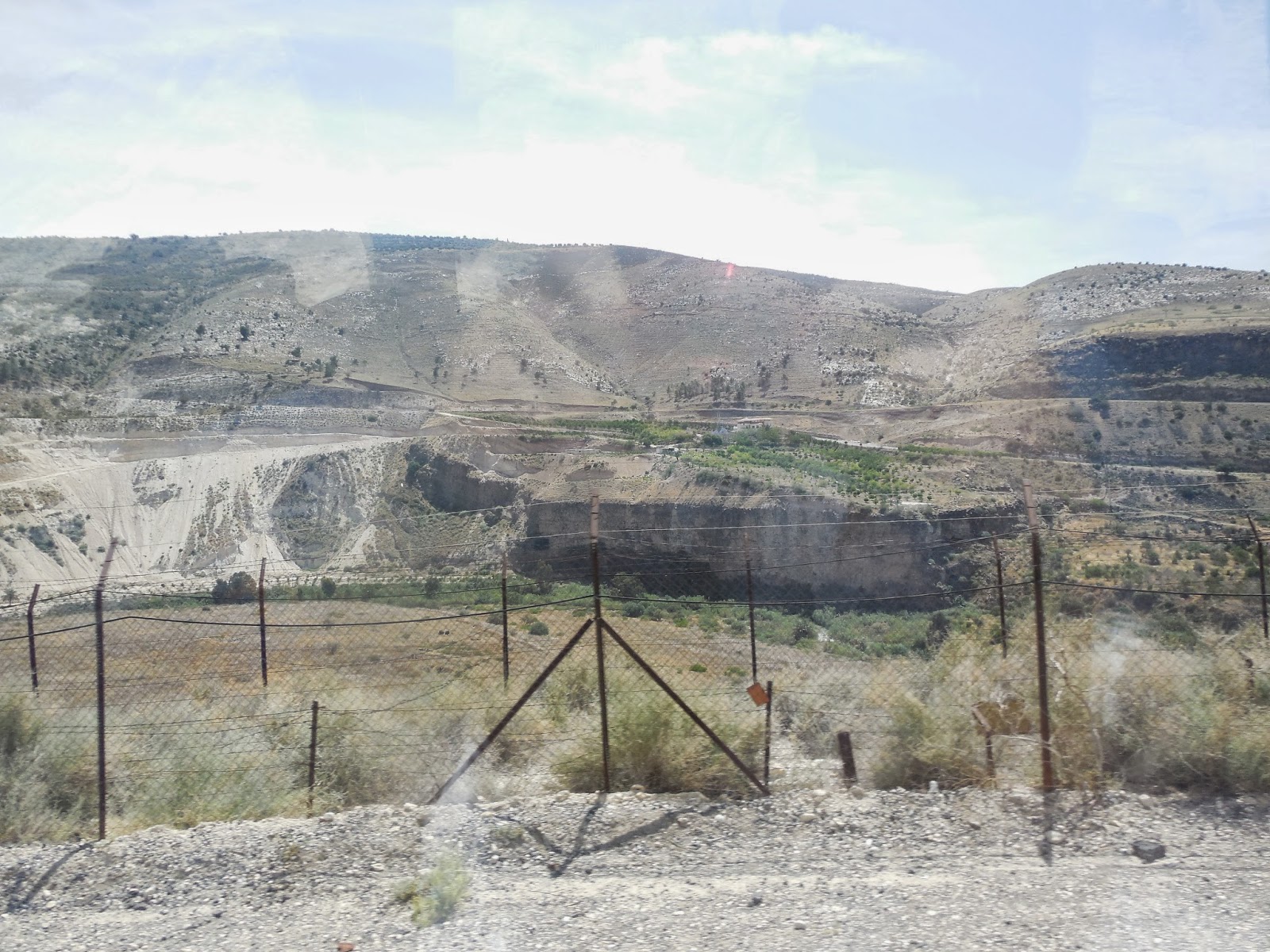
Israel/Jordan border at Golan Heights
Israel/Syria border at Golan Heights
Ancient ruins at Capernaum
Ancient synagogue at Capernaum
Baha'i Hanging Gardens
Haifa viewed from Mt. Carmel
We enjoyed our two busy stops in Israel and hope we can visit again some day. Next stop, Rhodes, Greece.


